

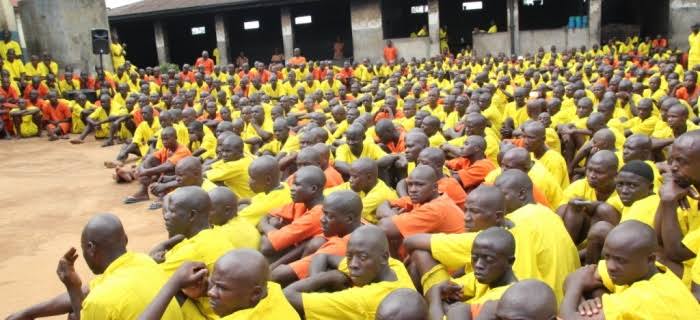
The High Court in Kampala has dismissed an application seeking to compel the Electoral Commission (EC) to facilitate voting by prisoners, ruling that the matter had already been conclusively determined by an earlier court decision.
In a ruling delivered on January 4, 2026, Justice Bernard Namanya held that the application filed by city lawyer Ms Aloyo Nyeko Omega was barred because the issue had already been decided by a competent court.
“This court deems it necessary to determine the question as to whether the suit is barred…,” Justice Namanya said, before concluding that the matter had already been “heard and finally decided” in Kalali Steven v Attorney General and Electoral Commission, High Court Miscellaneous Cause No. 35 of 2018.
Ms Aloyo had asked the court to issue an order of mandamus compelling the EC to make arrangements for prisoners to vote in the 2026 general elections.
She also sought declarations that the Commission’s failure to do so was illegal, discriminatory, and contemptuous of judicial authority.
In her submissions, Ms Aloyo argued that she had brought the application in her own right as a citizen of Uganda and in the public interest, citing several provisions of the Constitution, including Articles 1, 20, 21, 38, 42, and 59.
“My Lord, the Applicant brings this notice of motion in her own right as a citizen of Uganda,” she submitted, adding that the Commission’s omission was “not a discrete, one-off act but a continuing violation.” She further contended that prisoners constitute a vulnerable group whose exclusion from the electoral process undermines equality and fairness under the law.
Ms Aloyo also relied on a Daily Monitor online article titled “EC locks Ugandans abroad, prisoners out of 2026 polls”, published on July 20, 2025, which she tendered as electronic evidence to show that the Electoral Commission had revised the electoral roadmap without including prisoners.
She urged the court to admit the article under the Electronic Transactions Act, 2011, and the Evidence Act, arguing that electronic records should not be denied admissibility simply because of their form.
However, before considering the merits of the application, Justice Namanya addressed the preliminary issue of res judicata under Section 7 of the Civil Procedure Act.
“The common law doctrine of res judicata… bars re-litigation of cases between the same parties over the same issues already determined by a competent court,” the judge said, citing previous authorities.
After reviewing the 2020 ruling by then-High Court judge Lydia Mugambe in Kalali Steven v Attorney General, Justice Namanya found that the question of whether prisoners have the right to vote under Article 59 of the Constitution had already been settled.
In that decision, Justice Mugambe held that Ugandans aged 18 and above, including prisoners and citizens in the diaspora, have a constitutional right to vote, and directed the EC to take all necessary measures to ensure compliance.
“The ruling of Lady Justice Lydia Mugambe… decisively dealt with the issue of prisoners’ right to vote as per the final orders of the court set out above,” Justice Namanya ruled. He added: “The law does not allow this court to consider the same issue again.”
As a result, the application was dismissed, with the court making no order as to costs.
The ruling was delivered by email and through the Electronic Court Case Management Information System (ECCMIS), in accordance with the Judicature (Electronic Filing, Service and Virtual Proceedings) Rules, 2025.
